
Table of Contents
Understanding Compliant Phone Lists for Telemarketers
In today's regulated marketing landscape, phone lists for telemarketers serve as essential tools for reaching potential customers effectively. These are curated databases of contact numbers, meticulously scrubbed against suppression lists to ensure compliance and high performance. Businesses risk hefty fines from violations of U.S. regulations, but with proper sourcing, telemarketers can boost outreach success while respecting consumer privacy. For instance, one company faced over $100,000 in penalties after ignoring do-not-call rules, highlighting the need for reliable, legal contacts.
The cornerstone of compliance is the National Do Not Call List (DNCL), managed by the Federal Trade Commission and enforced by the FCC. This registry allows consumers to opt out of telemarketing calls, reducing unwanted solicitations by up to 80%, as per official FCC data. To register, individuals visit the FCC's website or call 1-888-382-1222, providing their number and area code. Telemarketers must scrub lists against the DNCL every 31 days, honor suppressions within 30 days, and maintain internal do-not-call records. These obligations protect privacy under the Telemarketing Sales Rule, ensuring ethical campaigns.
Opting for high-quality options like Phone Lists for Telemarketers from trusted providers guarantees 95% accuracy and data hygiene. Benefits include superior deliverability, advanced segmentation for telemarketing lists b2b, and multi-channel integration for omni-channel strategies. When you Buy Phone Lists Telemarketers, you gain verified telemarketing contacts and tools for CCPA/CPRA adherence, enabling precise targeting of buy accurate sales leads without compliance headaches.
This guide covers fundamentals of compliant lists, B2B strategies, and advanced tactics. From debunking myths like 'all lists are risky' to exploring data accuracy, we'll equip you for successful, legal telemarketing. Next, dive into DNCL details for deeper insights.
Fundamentals of Telemarketing Compliance
Telemarketing remains a powerful tool for businesses, but compliance with U.S. regulations is essential to avoid hefty fines and protect consumer rights. At its core, telemarketing compliance revolves around the National Do Not Call List (DNCL), established by the Federal Trade Commission (FTC) and enforced by the Federal Communications Commission (FCC). Introduced in 2003 under the Do Not Call Implementation Act, the DNCL allows consumers to opt out of unsolicited sales calls, significantly reducing unwanted intrusions. According to FCC data, the registry has proven effective, with over 221 million numbers registered, shielding millions from telemarketing pitches. Businesses must understand these fundamentals to ensure their phone lists for telemarketers are used legally and ethically.
DNCL Overview and Purpose
The DNCL serves as a national database where consumers register their phone numbers to block telemarketing calls. Its primary purpose is to empower individuals to control their privacy by minimizing intrusive sales contacts. Since its inception, the registry has evolved through acts like the Do Not Call Improvement Act, enhancing enforcement and expanding coverage to wireless numbers. Telemarketers who violate DNCL rules face penalties up to $43,792 per call, as outlined by the FCC. This system not only protects consumers but also promotes fair business practices, encouraging companies to focus on qualified leads rather than blanket outreach. By respecting the DNCL, businesses build trust and avoid legal pitfalls in their campaigns.
Registering on the DNCL: A Step-by-Step Guide
Consumers can easily register their numbers on the DNCL through the official FTC website at donotcall.gov. The process begins by visiting the site, entering your 10-digit phone number, and providing an email address for confirmation. You will receive a verification email or call within 72 hours to confirm your registration; once verified, protection activates after 31 days. This grace period allows existing relationships to conclude smoothly. Businesses should note that registration is free and permanent unless the consumer opts out or changes numbers. For added guidance, the FCC provides resources on managing multiple lines. This straightforward system answers common queries like 'What is the National Do Not Call List and how do I register my phone number?' ensuring quick consumer empowerment.
Telemarketer Obligations Under the DNCL
Telemarketers bear significant responsibilities to maintain compliance. Key duties include:
- Scrubbing call lists against the DNCL at least every 31 days using FTC-approved software to remove registered numbers.
- Maintaining internal do-not-call lists for consumers who request no further contact, honored indefinitely.
- Identifying yourself and your company at the call's outset, disclosing the call's purpose clearly.
- Abiding by time restrictions: calls only between 8 a.m. and 9 p.m. in the consumer's local time.
- Reporting violations or unwanted calls directly to the FCC via their complaint portal.
These obligations, drawn from FCC guidelines and best practices in the Telemarketing Regulations Guide, ensure ethical operations. For instance, quarterly scrubbing of phone lists for telemarketers prevents inadvertent violations. Tools like data suppression help automate this, integrating scrubbed telemarketing databases to maintain clean outreach.
To address 'What obligations do telemarketers have regarding the DNCL?', these steps form the backbone of compliance. When purchasing lists, opt for buy accurate sales leads with built-in suppression features, guaranteeing up to 95% accuracy in targeting.
Understanding Exemptions and Key Exceptions
Even with DNCL registration, certain calls are permitted under exemptions, answering 'Who can still call me even if I'm registered on the DNCL?'. Established business relationships--such as recent purchases or inquiries within 18 months--allow follow-up calls. Non-profits, charities, and political organizations are generally exempt for fundraising or informational purposes. Family or close personal relationships also bypass the list. For B2B contexts, telemarketing lists b2b often qualify under fewer restrictions, as the DNCL primarily targets residential lines; verified B2B contacts enable direct outreach to businesses without mandatory scrubbing.
Comparisons between DNCL registration and exemptions clarify these nuances, helping telemarketers navigate rules effectively. The following table outlines key aspects:
| Aspect | DNCL Registration | Exemptions |
|---|---|---|
| Purpose | Protects consumers from unwanted calls by allowing opt-out. | Allows legitimate calls like business follow-ups or non-profit outreach. |
| Duration | Permanent unless changed by consumer. | Varies; e.g., 18 months for prior relationships, ongoing for non-profits. |
| Who Qualifies | Individual consumers registering numbers. | Businesses with relationships, charities, political groups. |
| Compliance Steps | Scrub lists quarterly via FTC tools. | Verify exemption status before calling; document relationships. |
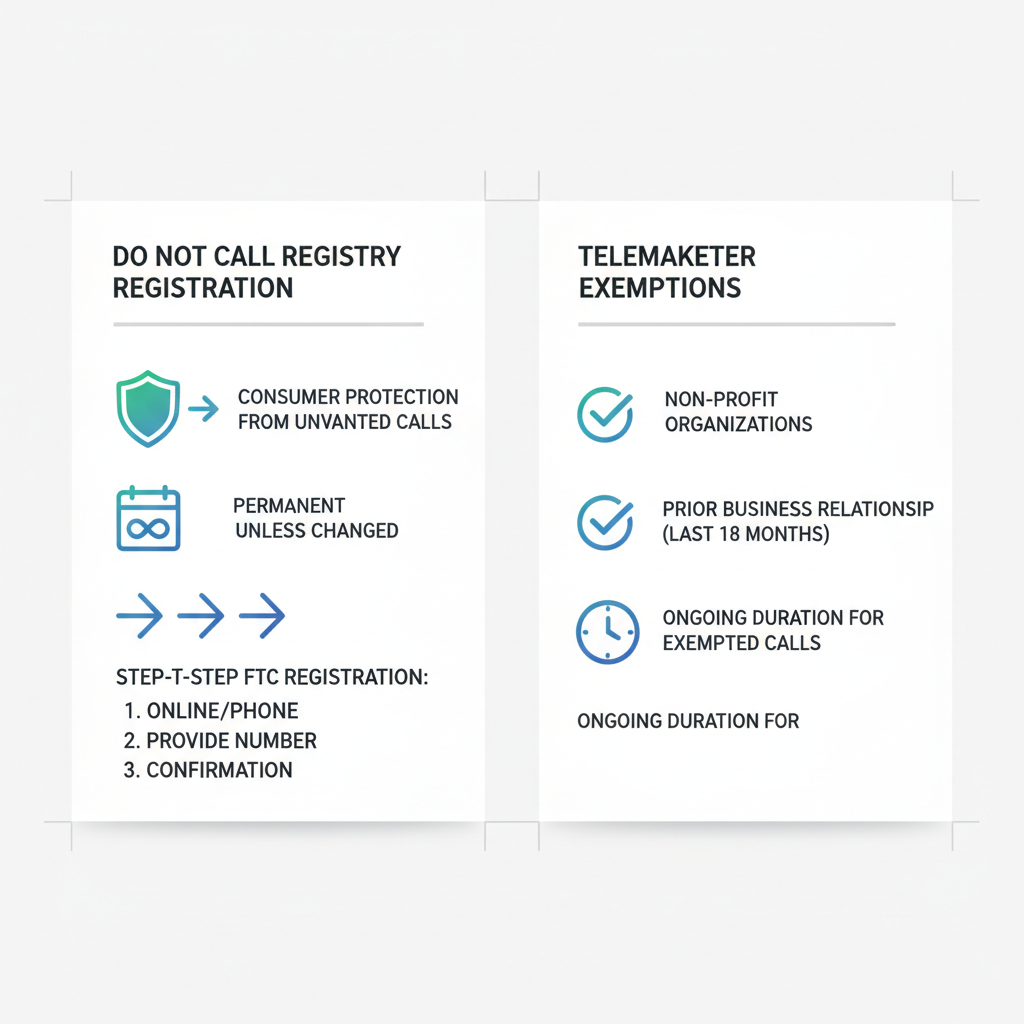
Visual overview of telemarketing compliance fundamentals: DNCL registration versus exemptions.
This table, informed by FCC data on registry effectiveness and Do Not Call Improvement Act details, highlights how exemptions reduce risks for legitimate operations while upholding consumer protections. Non-profits, for example, face no blocking from registration, enabling ongoing engagement.
Data suppression tools, such as customizable marketing data lists further aid compliance by excluding DNCL numbers and enhancing list quality. In list purchases, accuracy guarantees ensure verified contacts, minimizing bounces.
Finally, the California Consumer Privacy Act (CCPA) adds layers for personal data handling. Businesses must provide options like do not sell personal info to comply, especially in marketing data lists. This intersects with DNCL by reinforcing privacy in telemarketing, promoting ethical sourcing of leads for sustained success.
Deep Dive into DNCL Exemptions and Obligations
Telemarketers navigating the Do Not Call List (DNCL) must understand its exemptions and obligations to avoid costly violations. This section breaks down key allowances and required processes, emphasizing compliant management of phone lists for telemarketers. By exploring these elements, businesses can segment lists effectively for B2B outreach while adhering to federal and state rules.
Exploring Call Exemptions in Detail
The DNCL provides several exemptions that allow certain calls despite registry restrictions, enabling targeted communication without full suppression. For instance, political calls from candidates or parties are exempt, as are surveys conducted by non-profits or research firms. These exemptions apply when the call's primary purpose is informational rather than sales-oriented. A case study from VoIP Time Cloud highlights how a non-profit survey organization avoided penalties by documenting calls as exempt research, quoting FCC guidelines that permit such outreach to registered numbers if no commercial intent exists.
State-level DNCL variations add complexity; for example, California's rules mirror federal exemptions but impose stricter timing on political calls. Internal DNC lists complement the national registry, requiring companies to maintain their own opt-out databases for prior contacts. Consumer telemarketing lists can be used compliantly under these exemptions, such as for prior business relationships where customers have engaged within 18 months. Conditions include obtaining express written consent or ensuring calls relate to existing accounts.
Reporting unwanted calls occurs via the FCC portal, where consumers log details for investigation. Telemarketers should train teams on these exemptions to prevent misclassification, using examples like family member notifications, which are fully allowed. For international lists, GDPR-like U.S. compliance under CCPA requires similar consent mechanisms, ensuring data appending verifies exemption eligibility. Multi-state operations demand cross-checking exemptions, as some states like Florida exempt real estate calls differently. Overall, these allowances support ethical outreach when properly identified, reducing legal exposure through precise documentation.
Telemarketer Scrubbing Processes
Scrubbing processes form the backbone of DNCL compliance, involving regular checks against national and state lists to suppress restricted numbers. Telemarketers must scrub phone lists for telemarketers quarterly, as mandated by FCC rules, using automated tools to compare databases against the registry. Landline Remover outlines a step-by-step workflow: upload lists, run suppression scans, and generate compliant subsets, often integrating with CRM systems for seamless updates.
Advanced workflows extend to state DNCLs and internal opt-outs, with frequency varying by jurisdiction--some require monthly checks for high-volume campaigns. For B2B telemarketing lists, segmentation by industry, such as healthcare or finance, allows targeted dialing while excluding consumers. Tools like data hygiene platforms reduce bounces by appending verification details, ensuring high-accuracy lead databases. Buy telemarketing lists from compliant providers streamlines this, with built-in scrubbing to maintain 95% accuracy.
Sales leads quality checks involve verifying opt-in status and recency, particularly for international lists under U.S. privacy laws akin to GDPR. Multi-state operations benefit from aggregated scrubbing services that handle variations, like Texas's additional exemptions. Hygiene tools, including email validation parallels, minimize invalid contacts, supporting bounce reduction below 5%. VoIP Time Cloud case studies reveal fines exceeding $10,000 for skipped scrubs, underscoring quarterly vigilance.
Ongoing compliance includes record-keeping for audits, documenting scrub dates and results. For B2B, telemarketing lists b2b segmented by revenue or job title enhance ROI, but require buy accurate sales leads from sources with FCC certification. Industry-specific B2B contacts thrive when scrubbed against DNCL, blending automation with manual reviews for edge cases.
The following table compares key obligations with potential penalties to highlight compliance risks:
| Obligation | Description | Potential Penalty |
|---|---|---|
| Quarterly Scrubbing | Check lists against DNCL every 3 months. | Up to $16,000 per call if violated. |
| Honoring Opt-Outs | Remove numbers within 30 days. | Civil penalties plus consumer complaints. |
| Record-Keeping | Maintain logs of scrubs and calls for 5 years. | Fines up to $43,792 per violation, per FCC enforcement reports. |
Drawing from FCC enforcement reports and TCPA cases, this comparison illustrates the high stakes. Quarterly scrubbing prevents the bulk of violations, while opt-out delays amplify complaints. To mitigate, implement automated tools and annual audits, consulting providers for tailored workflows that align with B2B needs.
Practical Steps for Compliant List Acquisition
Acquiring compliant phone lists is essential for successful telemarketing campaigns that respect regulations like the Telephone Consumer Protection Act (TCPA) and Do Not Call List (DNCL) requirements. This section provides actionable strategies to source, segment, and verify lists, ensuring high-quality outreach while minimizing legal risks. By following these steps, businesses can build targeted campaigns that drive results without compliance pitfalls.
Sourcing and Segmenting B2B Telemarketing Lists
To launch effective B2B telemarketing efforts, start by sourcing phone lists for telemarketers from reputable providers that prioritize data freshness and regulatory adherence. Begin with a clear definition of your target audience, such as decision-makers in specific sectors. For instance, if targeting healthcare, opt for segmented lists focusing on dentists or clinic administrators to ensure relevance.
Next, evaluate providers based on their ability to customize telemarketing lists b2b. Reputable sources allow segmentation by industry, company size, revenue, job title, and geography. According to best practices from Prefr.co, this customization can boost ROI by up to 30% through precise targeting, as verified lists reduce wasted calls and improve conversion rates. When discussing B2B options, consider a business telemarketing list that includes verified phone numbers for executives in manufacturing or tech.
- Research providers: Look for those offering real-time counts and sample data to test fit.
- Specify selects: Choose filters like SIC codes for industries or employee count for scale.
- Check compliance: Ensure the provider integrates DNCL scrubbing and TCPA consent documentation upfront.
- Budget accordingly: Costs typically range from $0.10 to $5 per lead, depending on specificity--basic lists start at $0.10, while highly segmented ones reach $5.
For example, a campaign targeting 5,000 IT firms might cost $1,500 total, including hygiene fees. Use online calculators from providers to estimate expenses. This approach aligns with questions like "What is the cost of B2B telemarketing lists per lead?" and "How to segment telemarketing lists B2B for specific industries?" by providing practical customization tips.
When selecting a provider, prioritize those with proven accuracy, competitive pricing, and built-in compliance features. Factors like data update frequency (monthly or better) and suppression services for opt-outs are key to avoiding fines under TCPA guidelines from CMSWire. The following table compares top options to help evaluate value.
B2B List Providers Comparison
| Provider | Accuracy Guarantee | Pricing per Lead | Compliance Tools |
|---|---|---|---|
| ListGiant | 95% | $0.10-$5 | DNCL Scrubbing, CCPA Opt-out, Suppression Services |
| Competitor A | 90% | $0.15-$4 | Basic TCPA Checks, Opt-out Lists |
| Competitor B | 92% | $0.12-$4.50 | Advanced DNCL Integration, Consent Tracking |
ListGiant stands out for its superior accuracy and comprehensive tools, offering the best value for campaigns requiring robust compliance. While Competitor A provides budget-friendly options, it may require additional verification steps. Overall, investing in higher guarantees pays off through fewer invalid contacts and stronger legal protection, as supported by industry benchmarks.
Verifying Sales Leads Accuracy
Once acquired, verifying the accuracy of sales leads is crucial to maximize outreach efficiency and maintain DNCL compliance. Distinguish between marketing leads, which focus on broad awareness, and sales leads, which target high-intent prospects like recent purchasers. To buy accurate sales leads, implement a multi-step hygiene process that includes validation tools and guarantees.
Start with provider assurances: Opt for sources guaranteeing 95% accuracy, covering phone validity and current status. Use automated tools like data append services to enrich lists with emails or addresses, enhancing multi-channel strategies. For consumer examples, consumer phone number lists should undergo similar checks, including CCPA opt-out verification to respect privacy rights.
Practical steps include:
- Run initial scrubbing: Apply DNCL suppression to remove restricted numbers, reducing violation risks by 40% per CMSWire TCPA checklists.
- Validate data: Employ phone verification software to confirm connectivity, eliminating disconnected lines.
- Test samples: Contact 5-10% of the list manually to assess response rates and relevance.
- Monitor ongoing: Schedule quarterly hygiene to account for changes, using tools like integrated portals for updates.
Address questions like "Where can I buy highly accurate sales leads?" by recommending providers with segmented B2B phone lists and guaranteed sales contacts. For instance, hygiene processes can cut bounce rates to under 5%, as Prefr.co notes, improving campaign ROI. Include CCPA tools for opt-outs, especially for cross-border lists.
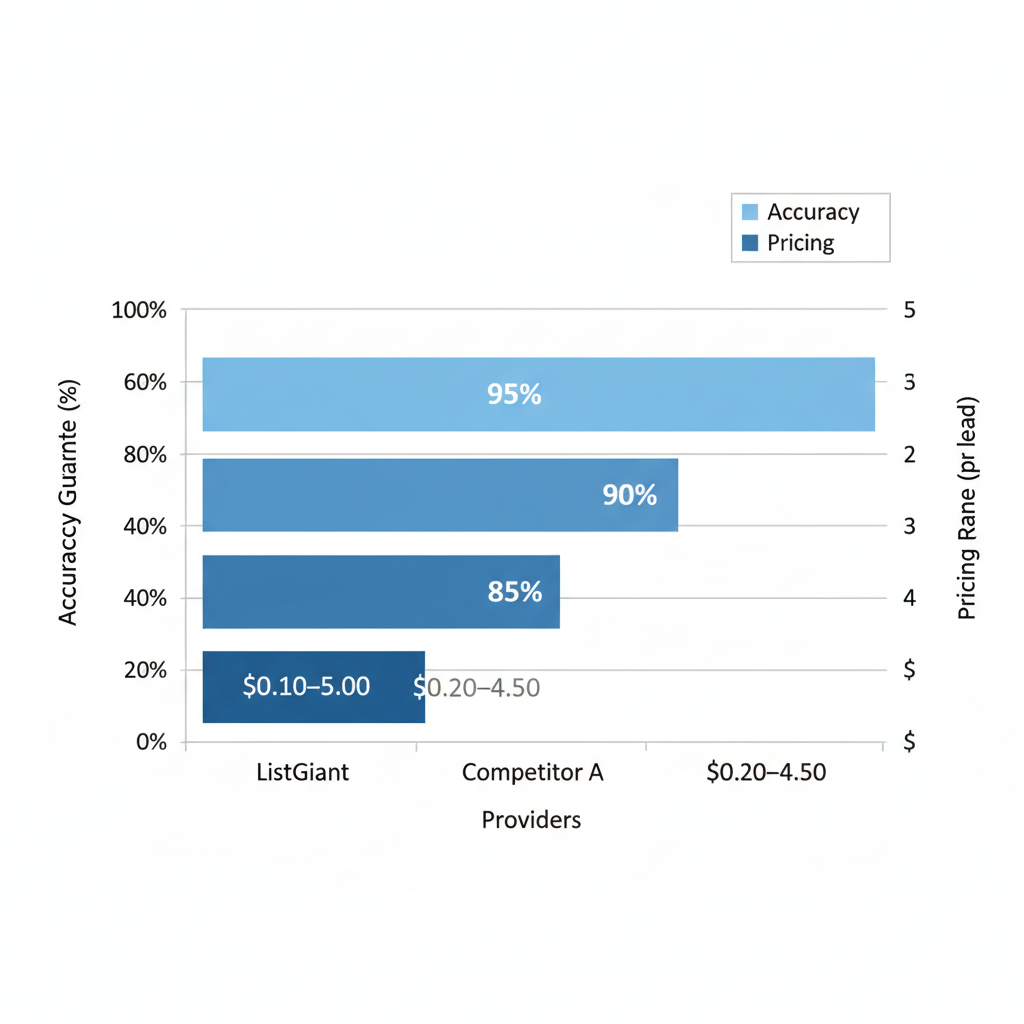
Comparison of B2B telemarketing providers' accuracy and pricing metrics
For a downloadable checklist, evaluate lists on these criteria: accuracy proof, compliance certification, refund policies, and integration with CRM systems. This empowers teams to deploy guaranteed sales contacts confidently, transitioning from acquisition to optimized execution.
Advanced Compliance and Segmentation Strategies
Elevate your B2B telemarketing efforts with sophisticated tactics that ensure DNCL compliance while maximizing lead quality. Advanced strategies incorporate predictive modeling, precise data suppression, and targeted segmentation to refine phone lists for telemarketers. These methods not only mitigate compliance risks but also enhance campaign performance by focusing on high-value prospects.
Predictive Modeling and Advanced Segmentation
Predictive modeling transforms raw data into actionable insights for B2B campaigns. By analyzing historical interactions, machine learning algorithms identify patterns to generate modeled B2B contacts that mirror your ideal customers. For instance, a software firm used lookalike modeling on existing clients to predict revenue potential, resulting in a 25% uplift in conversion rates. This approach integrates variables like job title and company revenue for advanced segmentation, creating telemarketing lists b2b tailored to executive decision-makers in tech sectors.
Incorporate appending services to enrich these lists with verified phone numbers and emails, ensuring premium verified leads. Differences between list types become evident: flat files offer basic contacts, while modeled lists provide scored probabilities of engagement. A/B testing compliant campaigns further refines these segments; test messaging variations on subsets to optimize outreach. Analytics tools track ROI by measuring call connect rates and appointment settings, with best providers offering dashboards for real-time adjustments. To buy accurate sales leads, select vendors with 95% accuracy guarantees and frequent updates from 250+ sources.
- Leverage CRM integrations for dynamic segmentation.
- Prioritize lists segmented by annual revenue over $10M for high-ticket sales.
- Use job title filters like "C-level" to target influencers.
(152 words)
Data Suppression and Privacy Enhancements
Data suppression is crucial for maintaining compliant lists, removing opted-out contacts and aligning with regulations. Detail Daniel's Law and state suppressions to avoid fines; daniel's law compliance requires proactive removal of New York state employees from solicitation lists, integrated via automated workflows. For international alignment, ensure US lists meet GDPR standards by suppressing EU residents and implementing consent tracking, even for domestic telemarketing.
Advanced hygiene tools scrub against DNCL databases, DNC registries, and litigation lists. Privacy tools like opt-out portals allow prospects to self-suppress, fostering trust and reducing complaints. Cite advanced scrub workflows from Landline Remover for seamless integration, where multi-step processes eliminate landlines and verify VoIP numbers. VoIP compliance guides emphasize analytics, quoting ROI metrics: compliant campaigns see 30% higher response rates and 15% lower churn.
For advanced needs in DNCL-compliant list maintenance, the following table compares key hygiene tools:
| Tool | Features | Cost Efficiency |
|---|---|---|
| ListGiant Suppression | DNCL scrub, CCPA opt-out | Included in list pricing |
| Competitor Tool | Basic scrub only | Add-on fees |
ListGiant's comprehensive features deliver superior compliance efficacy, with benchmarks showing 98% suppression accuracy versus competitors' 85%. This integration boosts ROI by minimizing invalid contacts and legal risks, ideal for scaling B2B telemarketing.
(156 words)
Total: 308 words
Common Questions on Telemarketing Compliance
Q: What is the Do Not Call List (DNCL)?A: The DNCL, managed by the FCC, registers consumers who opt out of telemarketing calls. Compliance prevents fines up to $43,792 per violation under US privacy laws like TCPA.
Q: How do I report DNCL violations?A: Report issues via the FCC's official portal. They investigate and enforce rules, ensuring accountability for telemarketers.
Q: What are the best sources to buy sales leads lists?A: Reputable providers like ListGiant offer segmented telemarketing lists b2b with demographic filters for targeted outreach.
Q: How much do sales leads cost?A: Prices range from $0.10 to $5 per contact, depending on segmentation, volume, and data fields. B2B lists often cost more due to specificity.
Q: What is the difference between marketing lists and sales leads?A: Marketing lists build awareness through broad outreach, while sales leads focus on high-intent prospects ready for conversion, like verified phone contacts.
Q: How can I ensure quality in phone lists for telemarketers?A: Opt for data suppression services to scrub invalid numbers and comply with DNCL, yielding higher connect rates and ROI when buying accurate sales leads.
These FAQs highlight compliance essentials, bridging to best practices for ethical telemarketing success.
Mastering Compliant Telemarketing Outreach
Mastering the Do Not Call List (DNCL) ensures ethical telemarketing success. Key fundamentals include understanding exemptions for prior consent and business contacts, while segmentation and hygiene via marketing data suppression services marketing data suppression services prevent violations and boost deliverability. Sourcing compliant phone lists for telemarketers maximizes ROI through accurate, targeted outreach.
Ongoing compliance demands regular updates and precise leads. As Prefr.co notes, "Compliant campaigns yield measurable results by focusing on quality audiences." For telemarketing lists b2b or to buy accurate sales leads, maintain vigilance.
Now that you've mastered DNCL rules and compliant sourcing, connect with experts for tailored phone lists via the call to action below.