
Table of Contents
Understanding Small Business Mailing Lists
In today's competitive landscape, small business mailing lists serve as powerful tools for targeted marketing, enabling entrepreneurs to connect directly with potential customers through direct mail, email, and multi-channel campaigns. These segmented databases of consumer and B2B contacts help small businesses acquire leads and foster engagement without wasting resources on broad, ineffective outreach.
The benefits are clear: targeted prospect lists boost ROI by up to 30% through demographic and behavioral segmentation, as noted in guides on buying email lists. Providers like ListGiant offer a vast sales leads database with 280 million consumer and 28 million business records, ensuring 95% accuracy and regular refresh rates for compliance and deliverability. For B2B needs, explore Mailing Lists for Business to access custom business contact databases that drive precise outreach. Key considerations include data freshness to avoid bounces and adherence to privacy laws like CCPA.
This guide walks you through building or acquiring your ideal list, from defining goals to selecting the right provider-sourced data from multiple partners. Get ready to elevate your marketing with actionable steps ahead.
Preparing for Your Mailing List Strategy
Before diving into acquiring small business mailing lists, take time to prepare your strategy. Start by assessing your marketing goals to ensure alignment. For instance, if lead generation is your focus, prioritize prospect targeting databases that match your ideal customer profile, such as businesses in specific industries. For customer retention, opt for segmented contact lists of past clients. This step helps tailor your approach, maximizing ROI for small businesses like a local consultancy aiming to expand its client base through targeted outreach.
Next, establish a realistic budget and prioritize compliance. Costs for contacts typically range from $0.10 to $5 per record, depending on data depth and volume--expect $500 to $10,000 for 10,000 contacts. Data hygiene is crucial for high deliverability, reducing bounces and improving engagement. To stay compliant with laws like CCPA and CPRA, use suppression tools to exclude opted-out or sensitive records. Here's a quick checklist:
- Verify provider's opt-in processes.
- Implement do-not-contact lists.
- Append suppression files regularly.
This foundation builds confidence in your campaigns. Finally, evaluate providers using criteria like database size--top ones offer access to 28 million U.S. businesses--and accuracy guarantees up to 95%. Look for Business Mailing Lists with robust compliance features and multi-channel options, including B2B email lists for marketing, to support integrated strategies ahead.
Defining Your Target Audience
Defining your target audience is the first crucial step in building effective small business mailing lists. Start by outlining your ideal customer profile to ensure your campaigns reach the right people. For small businesses like local service providers, this means pinpointing who needs your offerings most.
Step-by-Step Instructions: Begin with demographic selects such as age, income, and location to narrow your reach. Next, incorporate B2B criteria like job title, company revenue, and industry for precision--consider targeted email lists tailored to decision-makers in relevant sectors. Finally, layer in behavioral data indicating purchase intent, such as recent inquiries or online activity, to refine your audience segmentation lists.
According to the Ultimate Guide to B2B Mailing Lists, using these selects can significantly boost response rates by focusing on high-potential prospects from a reliable sales leads database.
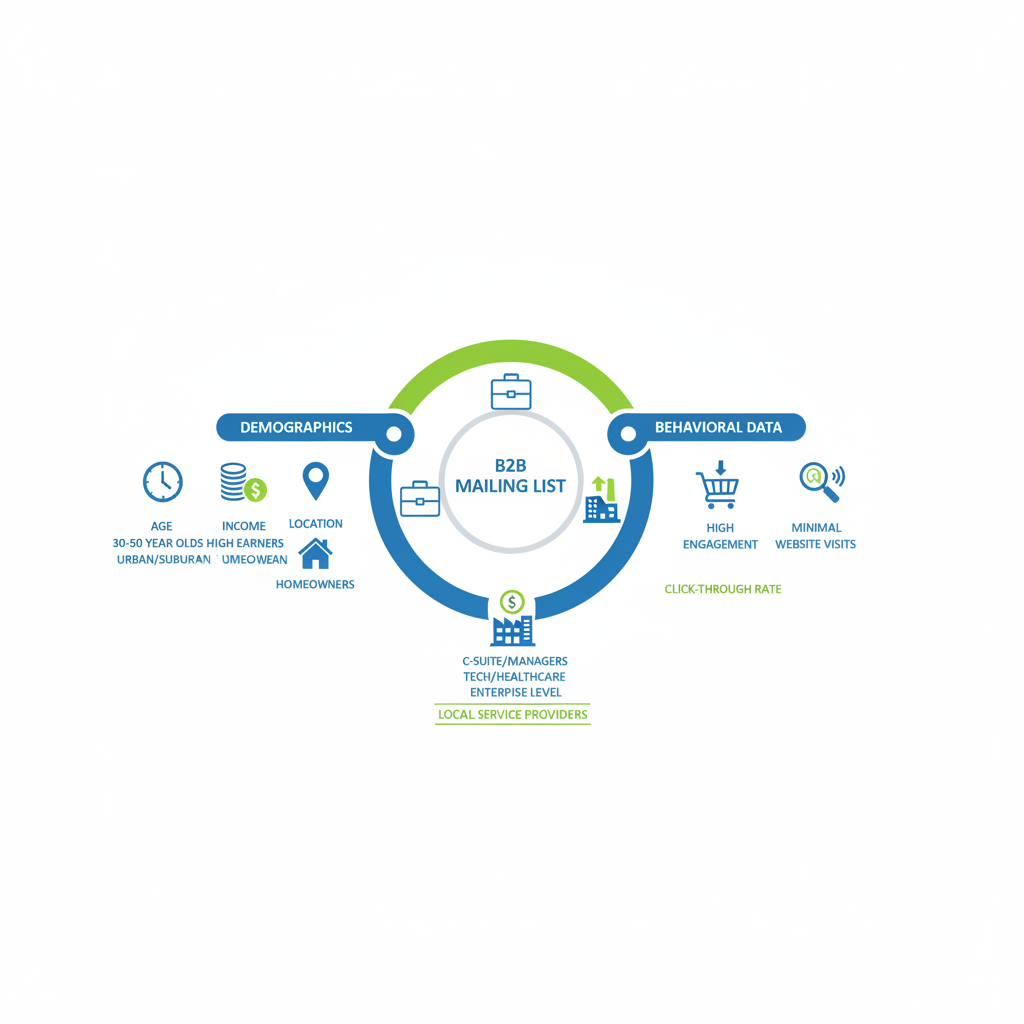
Visual breakdown of target audience segmentation for effective B2B mailing lists
Why It Matters: Precise audience definition directly impacts ROI by reducing wasted efforts on uninterested recipients and increasing engagement with qualified leads, leading to higher conversion rates for your B2B email lists for marketing.
Tips for Success: Prioritize just 3-5 key criteria to avoid over-segmentation. Test combinations with sample data to see what resonates. For example, target mid-level managers in retail with annual revenues under $1M for a local consulting service using small business mailing lists.
This targeted approach sets the foundation for exploring data sources in the next step.
Exploring Data Sources and Origins
Building on your defined audience from the previous step, understanding the origins of small business mailing lists ensures you access reliable data tailored to your targets. Reputable providers compile these lists from diverse, multi-partner networks to maintain freshness and relevance. For instance, leading services draw from over 250 contributors, blending public records, transactional data, and opt-in sources to build comprehensive marketing data lists. This approach covers both consumer and B2B pools, with a strong emphasis on U.S.-focused coverage for accurate targeting.
Researching sources reveals a mix of databases: consumer lists stem from demographic and behavioral data, while B2B email lists for marketing originate from company registries, trade shows, and professional networks. Verification processes, including real-time email checks and phone number validation, confirm accuracy rates above 95 percent. Providers like those specializing in verified contact databases use automated hygiene tools to scrub outdated entries, ensuring high deliverability for campaigns.
Why it matters: Quality origins directly impact deliverability and engagement rates. Poorly sourced data leads to bounces and spam complaints, eroding trust and ROI. Reliable small business mailing lists from vetted partners minimize risks and boost response rates.
Tips: Always check a provider's partner count and update frequency; opt for those guaranteeing accuracy. Inquire about sourcing transparency to build confidence in your sales leads database purchases, paving the way for effective segmentation next.
Selecting Segmentation Criteria
To refine your targeting for small business mailing lists, start by selecting appropriate segmentation criteria that align with your marketing goals. These selects allow you to build precise lists that reach the right prospects, improving campaign outcomes for B2B outreach.
Key criteria include:
- Firmographics: Focus on company details like industry, employee size, and revenue to target relevant sectors. For example, segment by retail businesses under 50 employees for niche markets in small business mailing lists.
- Technographics: Identify tools and technologies used, such as CRM software, to connect with tech-savvy firms.
- Intent signals: Use purchase history or website behaviors to prioritize active buyers in your sales leads database.
Layering these selects creates refined prospect lists by combining multiple filters, such as industry plus intent data. This approach boosts precision, delivering up to 30% higher engagement rates as seen in provider case studies on layered B2B email lists for marketing.
For layering tips, test combinations iteratively and incorporate data hygiene services to ensure clean, accurate data that minimizes bounces and enhances deliverability.
Evaluating Providers and Pricing
When selecting providers for small business mailing lists, focus on key factors like database scale, accuracy guarantees, and pricing to ensure effective B2B email lists for marketing. Evaluate the size of their sales leads database, which should offer extensive U.S. coverage for targeted outreach. Check refresh rates to access current data, suppression tools for clean lists, and compliance with privacy standards. Pricing typically ranges from 0.10 to 5.00 USD per contact, as benchmarked by B2B sales leads databases, allowing affordable contact lists without compromising quality.
To assess providers, compare their offerings side-by-side based on these criteria. Start by requesting details on database freshness and support services, then review user testimonials for reliability.
Choosing the right provider saves costs by minimizing wasted mailings and improving response rates through accurate, compliant lists.
For best results, request personalized quotes and free samples to test fit before committing to a purchase.
The following table compares leading providers on essential metrics, aiding your selection for small business mailing lists:
| Provider | Database Size | Accuracy Guarantee | Price per Contact (USD) |
|---|---|---|---|
| ListGiant | 280M consumers, 28M businesses | 95% | 0.10-5.00 |
| Competitor A | 150M consumers | 90% | 0.15-6.00 |
| Competitor B | 20M businesses | 85% | 0.08-4.50 |
Data from provider sites and reviews emphasizes U.S. coverage. ListGiant stands out with its vast database and high accuracy, justifying the pricing for reliable B2B email lists for marketing. Suppression tools, including data cleansing services, enhance deliverability and reduce bounces, making it a strong choice.
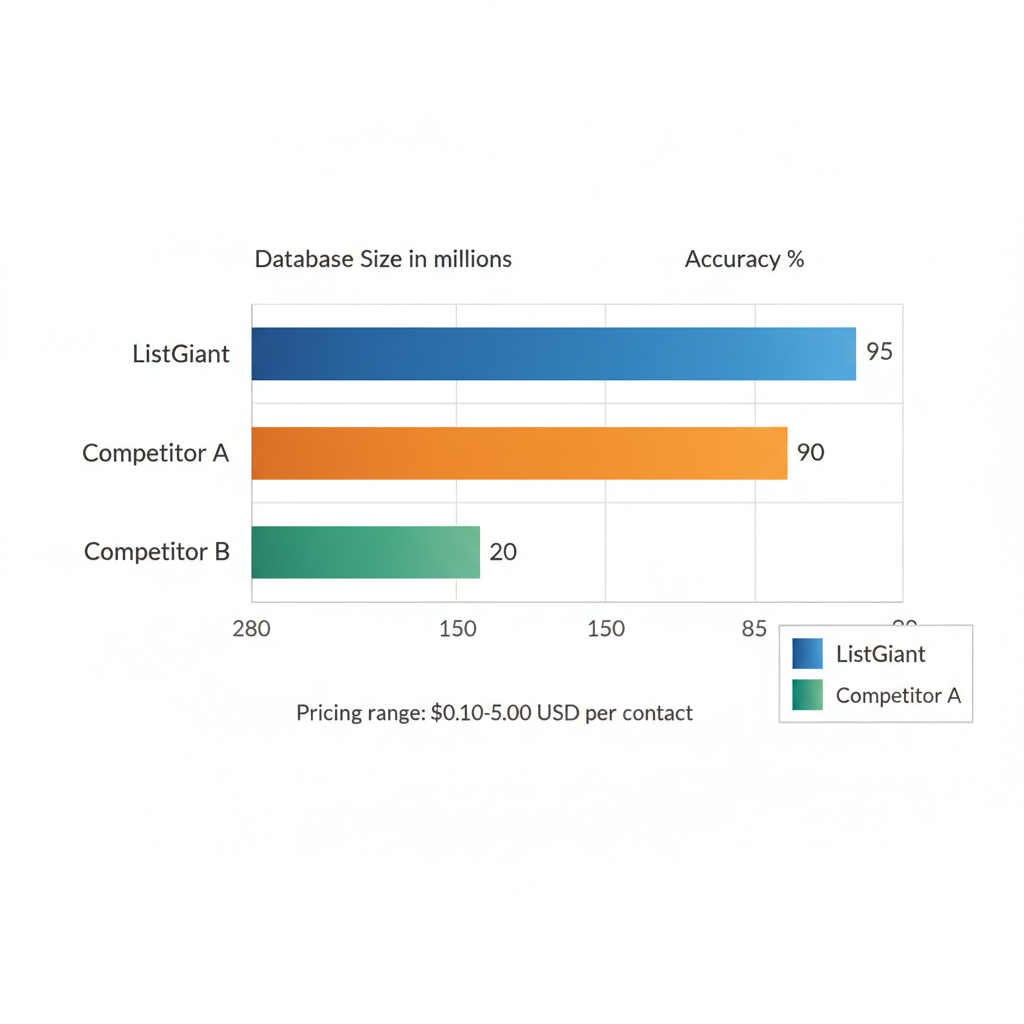
Comparison of key metrics across mailing list providers
This evaluation sets the stage for sampling lists to verify performance.
Requesting and Testing Samples
Once you've evaluated your targeting options, the next step is requesting free samples to assess the quality of small business mailing lists firsthand. Accessing provider portals is straightforward: simply enter your criteria for instant counts, then proceed to sample requests. For instance, you can easily obtain free data samples by submitting a quick form with your select details, allowing you to review a subset of contacts without commitment. This enthusiastic free access empowers you to verify accuracy and relevance before scaling up.
Testing these trial contact lists reduces risk significantly, as it lets you confirm data freshness and deliverability. According to buying tips from industry experts, samples are crucial for validation, preventing costly mismatches in your B2B email lists for marketing. Run a small campaign on the sample to measure key metrics like open rates and engagement, ensuring the sales leads database aligns with your goals.
For optimal results, test subsets under real conditions, such as sending targeted emails to a portion of the list. Check update frequency through sample metadata to answer queries like how often a sales leads database is refreshed. This hands-on approach bridges evaluation to confident implementation, minimizing waste and maximizing ROI.
Implementing Data Hygiene and Compliance
After testing your campaigns, focus on implementing data hygiene and compliance to maintain the integrity of your small business mailing lists. Start by applying suppression lists to remove invalid or unsubscribed contacts, ensuring emails reach active prospects. Use appending services to enrich your data with verified phone numbers or addresses, while leveraging CCPA-compliant tools like opt-out mechanisms and privacy request handlers to respect consumer rights. These steps help keep your prospect data clean and compliant, reducing risks in your outreach.
Maintaining hygiene is essential to avoid high bounce rates that can damage sender reputation and lower deliverability. Poorly managed lists lead to blacklisting by email providers, wasting marketing budgets on undeliverable messages. By prioritizing clean data, you sustain long-term value in your B2B email lists for marketing, fostering trust and better engagement rates.
For effective maintenance, schedule quarterly refreshes of your sales leads database to update contact details and remove outdated entries. Integrate hygiene checks directly into your campaign workflows, such as pre-send validations. Monitor bounce reports regularly and adjust suppression lists accordingly, ensuring ongoing accuracy and compliance.
Deploying and Optimizing Campaigns
Once you have acquired high-quality small business mailing lists, it's time to launch your multi-channel campaigns effectively. Begin by setting up email and direct mail integrations through platforms like ListGiant's deployment services. Segment your campaign contact lists based on demographics or behaviors, then schedule targeted sends to ensure timely delivery. Incorporate data appending to add personalization, such as phone numbers or social profiles, enhancing engagement rates by up to 30 percent according to industry benchmarks.
Optimizing these campaigns is essential to maximize returns on your investment, especially when considering costs like $0.10 to $5 per contact. By refining strategies, you can achieve higher open rates and conversions, turning a standard mailing into a revenue driver.
Key tips include implementing A/B testing on subject lines and offers to identify top performers, then using analytics tools to track metrics like click-through rates (aim for 2-5 percent) and ROI. Monitor bounce rates under 2 percent and adjust suppressions for compliance, ensuring sustained performance across sales leads database and B2B email lists for marketing. This approach not only measures success but sets the stage for addressing common challenges ahead.
Addressing Common Mailing List Challenges
Managing small business mailing lists can be frustrating when campaigns fall flat due to unexpected hurdles. Common issues include high bounce rates that waste resources, low engagement from irrelevant sends, compliance risks leading to fines, and stale data that diminishes accuracy. For instance, a local retailer might see only 5% open rates because their list hasn't been refreshed in months, or a service provider risks penalties by overlooking opt-out updates. These pitfalls, often stemming from inadequate maintenance, can undermine even the best marketing efforts. Understanding how clean your mailing list data is key to diagnosing these problems early.
To troubleshoot contact lists effectively, start with targeted solutions. For high bounces, implement regular hygiene processes:
- Run validation tools to remove invalid emails weekly, reducing bounces by up to 30%;
- Append current phone numbers to your sales leads database for multi-channel verification.
Addressing low engagement requires segmentation tweaks:
- Divide your small business mailing lists by demographics or purchase history to boost relevance;
- A/B test subject lines for better personalization.
For compliance violations, update suppression lists immediately:
- Integrate Do Not Call and unsubscribe data to avoid legal issues;
- Use automated tools for ongoing monitoring.
To handle data staleness, adopt refresh protocols:
- Schedule quarterly updates from reliable sources;
- Leverage enrichment services to verify contact details.
A small bakery in Texas resolved bounce issues this way, cutting returns from 15% to 2% after hygiene fixes, while a consulting firm improved engagement by 25% through segmentation, turning leads into loyal clients.
Prevention is simpler with proactive steps. Partner with a trusted provider for built-in hygiene and compliance support, ensuring your lists stay fresh and legal. Regular audits and staff training can prevent most issues, saving time and boosting ROI in the long run.
Niche Applications Like Home Improvement Lists
For businesses seeking precise targeting, niche applications within small business mailing lists offer powerful segmentation opportunities. Consider the home improvement sector, where home improvement lists can pinpoint homeowners based on recent purchases or upcoming projects, such as kitchen remodels or roof repairs. These selects allow marketers to reach individuals actively planning renovations, ensuring higher engagement rates.
Integrating these with B2B strategies enhances outreach; pair consumer data with contractor details from a sales leads database to create hybrid campaigns. For instance, B2B email lists for marketing can target suppliers to pros serving high-potential areas. Customization benefits include tailored messaging that boosts response rates by up to 30 percent, as seen in specialized databases, making niche lists essential for commercial success in competitive markets. These niche lists also support seasonal promotion timing and inventory planning for vendors.
Visualizing Your Marketing Database
Once you have acquired targeted Small Business Mailing Lists, the next crucial step is to visualize your sales leads database for actionable insights. This process transforms raw data into clear patterns, helping businesses identify high-potential segments within their B2B email lists for marketing. By leveraging user-friendly tools recommended by top B2B data providers, you can map geographic distributions, demographic breakdowns, and behavioral trends effectively.
In the tool discussion, start with marketing database visualization platforms that offer drag-and-drop interfaces for creating heat maps and interactive charts. These tools allow you to interpret segments, such as revenue size or industry focus, revealing underserved markets or over-saturated areas. For instance, a visual dashboard might highlight regions with dense concentrations of SMB decision-makers, guiding refined targeting.
Optimization follows naturally from these visuals. Adjust your marketing lists based on interpreted data, prioritizing high-engagement clusters to boost campaign ROI. This practical approach ensures your outreach efforts are precise, reducing waste and enhancing overall performance in competitive B2B landscapes.
Maximizing Your Mailing List Success
Building effective small business mailing lists starts with clearly defining your audience, carefully evaluating providers, and maintaining rigorous list hygiene to ensure high deliverability and relevance. By focusing on these fundamentals, you create targeted campaigns that drive engagement and foster long-term relationships with prospects. Remember, success hinges on selecting a reliable partner that aligns with your goals, offering clean data and robust tools for sustained results.
ListGiant stands out with its 95% accuracy guarantee, comprehensive data hygiene, and multi-channel support, including a powerful sales leads database and B2B email lists for marketing. These strengths enable precise targeting across email, direct mail, and digital channels, maximizing ROI while minimizing waste from outdated or invalid contacts.
Ongoing optimization through regular updates and performance analysis keeps your campaigns sharp. Ready to start? Explore ListGiant's options to elevate your marketing efforts today.